Thursday, November 7, 2013

Safety First

As of December 1 of this year, Federal law requires all employees who come into contact with a hazardous chemical be trained on the new Safety Data Sheet system being used in the United States.  I work with our insurance Loss Prevention Corrdinator, Scott Bills, to do various types of training for the staff and today he is in to do our mandatory safety training. I've been working with Scott ever since I got here over 5 years ago to reduce potential liability wherever I can. 


The presentation was also in Spanish 


And we wrapped the whole thing up with a great cookout lunch...brauts and burgers from Chef Todd. I grill them up for the guys and we all enjoy a little comrodary. 


Tuesday, November 5, 2013

Hazardous material roundup

Better late than never

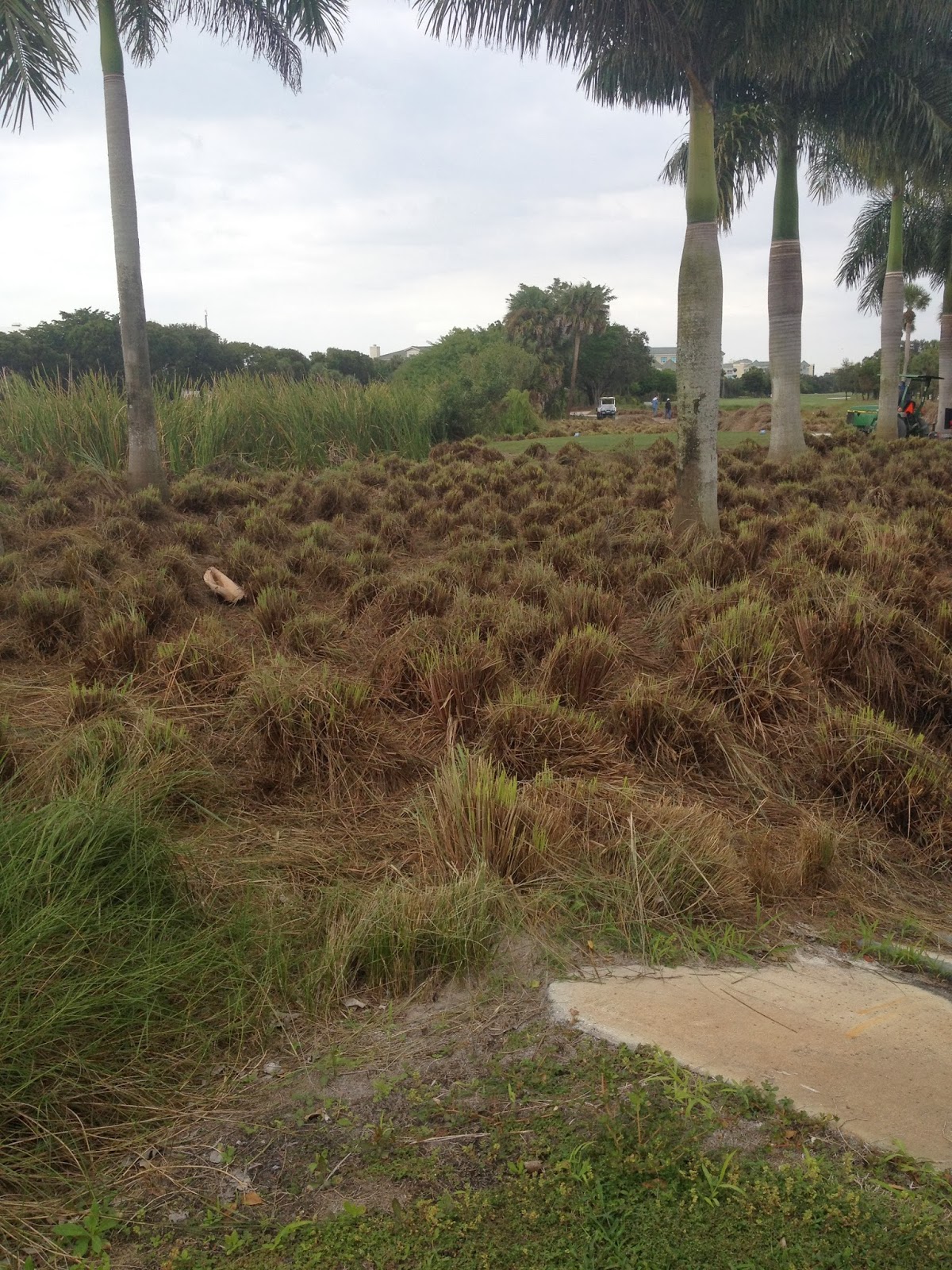
The last project before the maintenance staff is "done" for the season is to trim and clean up all of the landscape grasses. This is going to be a huge project since it has been 3 years since the last time the grasses have been trimmed. As I'm sure everyone has seen, the grass beds were full of old, dead material and not very attractive looking. The majority of the project is consisting of removing all of the dead material. As you can see in this picture below, there is a massive amount of material to trim.


 Once all of the material has been trimmed the grasses are completely covered with the trimmings.  All of this material would normally be spread around the base of the plants as a  mulch.  However, since it has been so long since the grasses have been trimmed and there is so much material, it all have to be removed and hauled off.


Once the trimming are cleaned off, the grass bed looks great.  In fact, if you look closely you can see that within a few days the plants have already grown a few inches.  Once we get the dead plant material removed it shouldn't take long before the beds are full of lush, green growth.


Monday, October 21, 2013

Sun shiny day

Bermuda grass needs at least 8 hours of direct sun light a day to perform its best. It is by far the most sun loving grass there is.  The more sun it gets, the more abuse it can take. That is important to remember when it comes to greens as the putting surfaces are the areas that take the most abuse: we cut them the lowest, we constantly are trying to verti-cut, roll, brush for better and better playability, and every person that plays the course uses them. So when a green doesn't get full sun it can become a problem. 

Here is a picture of hole 17 this morning (I'm looking backwards at the hole). The right side of the green is covered in shade, this is also the side where everyone enters and leaves the green. The compounding foot traffic and shade is an issue. As you can see it's 10:45 and there is still shade on the green. The yellow arrow shows the location of the sun. 


As a turf manager I am always worried about this time of year because the days are getting shorter and shorter as the sun sets into the southern skyline. In this picture looking westerly you can see how much farther the sun's path will sink before the winter solstice. The blue line is the winter solstice, the yellow is the current path of the sun and the red line is the summer solstice. 


Here's another look to show how far the sun sinks in the sky. This view is directly overhead of the 17th green. Again, blue is the lowest point in the sky, yellow is today and red is the highest.  


To help combat the wear and tear the plant receives while the days are getting shorter and shorter an old trick is to increase the mowing height of cut just a little bit. Our usual height if cut this time of year is around 0.125" or 1/8". When we get deep into winter I will raise the height of cut on the putting surfaces to 0.135"or 0.140". This might not seem significant, but to the plant it is a massive increase in its ability to produce food from photosynthesis. The small increase in height if cut will yield approximately a 40% increase in food production within the plant. Remember, the leaves of the plant are like little solar panels. The larger the leaf (the plant's solar panel) , the more light it can capture to use for food production (power). 

In the end my job is all about having a healthy turf on the course and excellent playability. Yet, the biggest problem with a golf course is that you have to leave it outside!!! All of those "outside" factors lead to a lot of things outside of my control...like not enough sun or too much rain. My job is about understanding the neaunces of the course and being proactive so the membership doesn't see the result of all the things outside of my control. 

By the way, this entire blog posting was done on my phone while on the course.  I have an app called Sun Seeker on my phone that tracks the sun's movements. It's great at evaluating shade issues and helping explain the importance of tree shade control. 

Friday, October 11, 2013

USGA REPORT PROBLEM FIXED

I have changed some settings on the USGA report to make it available to everyone. 

Thursday, October 10, 2013

USGA report card

The USGA Agronomist, Todd Lowe, was recently out for our annual Fall checkup.  The purpose of the visit is to evaluate how successful our summer programs were, as well as help us develop a successful stategy for the upcoming winter golfing season.  The report from the USGA Agronomist is available by clicking the link below. 

2013's Fall report from the USGA

Speckled Greens

On Monday of this week I had my staff apply some soluble fertilizer to the greens. The positive of the soluble fertilizer is that it is fast acting and gives immediate nutrition to the plant. The negative is that there is a serious chance of burning the plant from the material. This application was done an attempt to take advantage of the last course closure of the year, as well as to take advantage of having no golfers on the course to be able to apply the required water immediately after the application to avoid potential tip burn...obviously my team failed to accomplish the "avoid tip burn" part. 

The resulting speckled appearance is a superficial injury and will go away quickly. As the grass grows and extends vertically, the damages leaf tissue will be mowed off daily. Now that the course is open everyday the soluble fertilizers will be stored away and no longer used until next summer to avoid any potential mishaps during the winter golfing season.